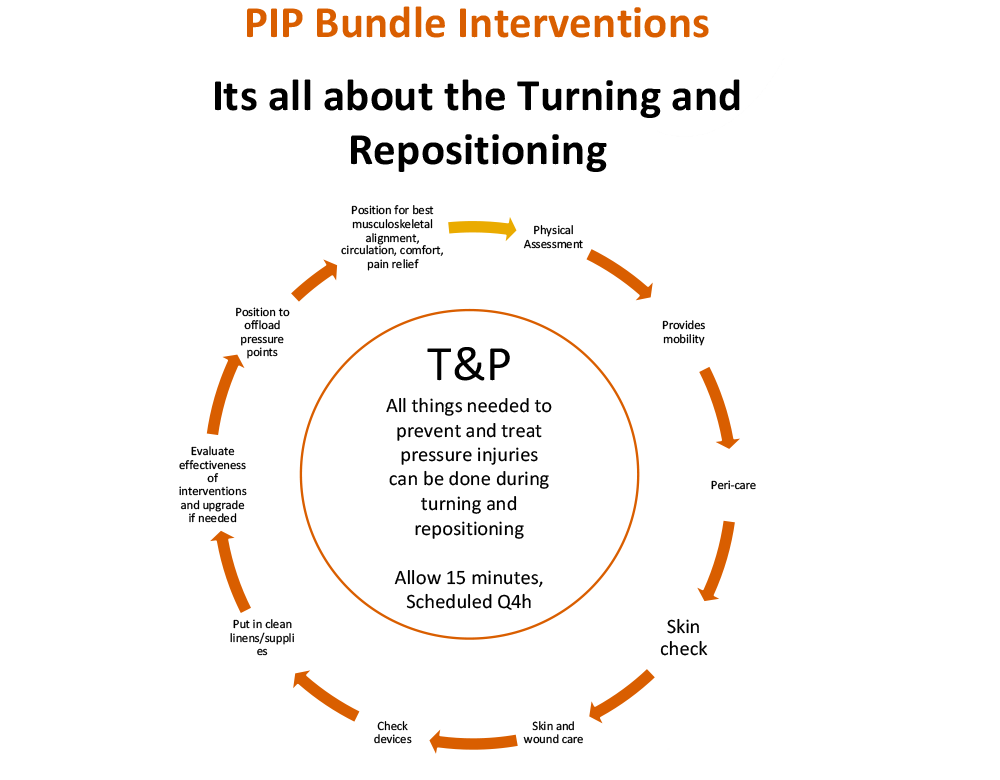
Remember, when it comes to reducing pressure ulcers, Removing Pressure is the #1 goal.
It can be tricky to get the pressure off the back, especially when a person is having difficulty laying on the side. But the good news is, with a small investment in well designed equipment and some good instructions, it can be done.
What is so special about The Bedsore Rescue™ design?
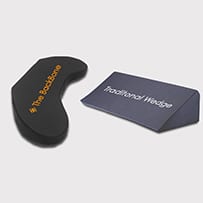
To achieve effective, comfortable and sustained pressure relief, you have to design outside the box (the straight edged, hard wedge box that is!)
The Bedsore Rescue™ is specially contoured to accommodate the natural curvatures of the back, providing a cradle-like support across the entire back and buttocks while circumventing the sacral area.
But what makes The Bedsore Rescue™ the most unique positioning wedge in the world is the patent pending bilateral angles. That means that 2 of the 3 sides of the wedge are the same. Why is that important? Because it makes The Bedsore Rescue™ the only positioning wedge that can support under the back and buttocks, instead of to the side.
By supporting under the body, the Bedsore Rescue™ is able to achieve a more gentle, stable and effective lift without slipping or “popping out” when the head of the bed is elevated.
The Bedsore Rescue™ is the most versatile positioning wedge in the world. It can be used to support under the legs, float the heels, reduce sliding, and even support under the head. It can even be placed on both sides of the person to achieve offloading in the flat, supine position.
See for yourself how well the Bedsore Rescue™ works. If you are not completely satisfied that The Bedsore Rescue™ Positioning Wedge is the most comfortable and effective turning wedge you will ever use, we will give you your money back!