Product

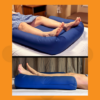
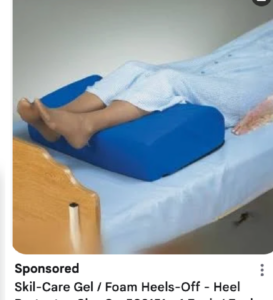
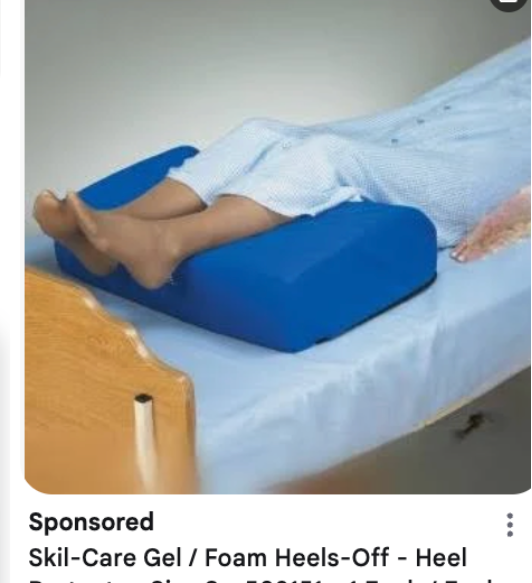
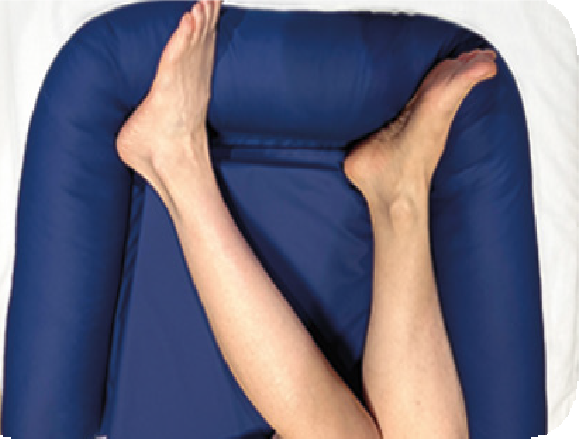
The Footbed Heel Floatation Pad Finally, A heel floater that actually keeps the heels floated

$5.00

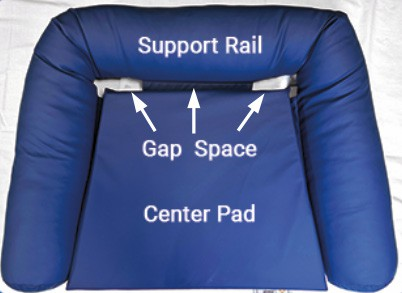
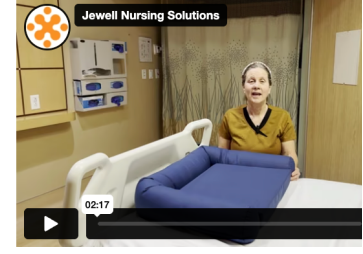
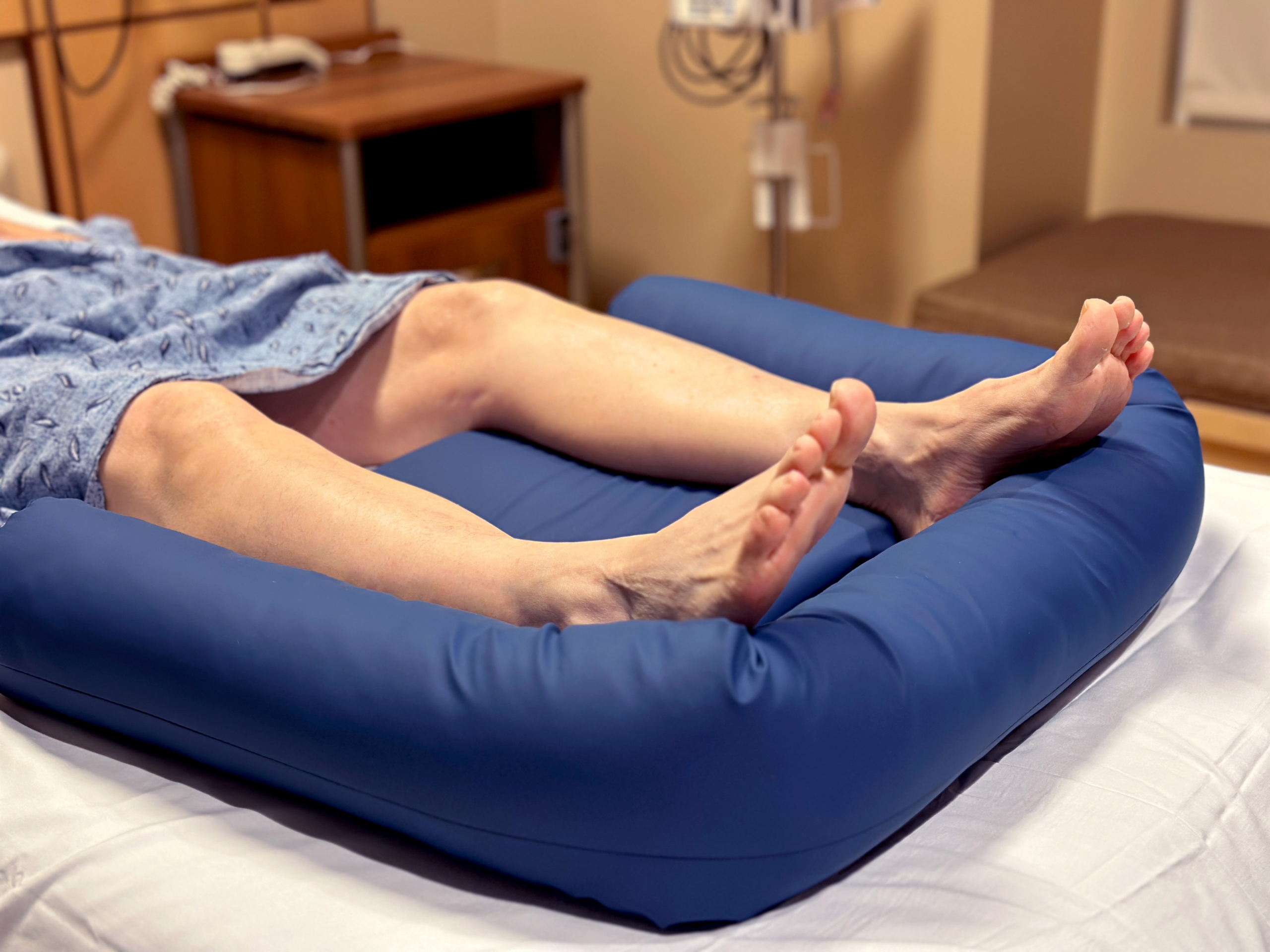
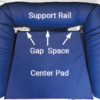
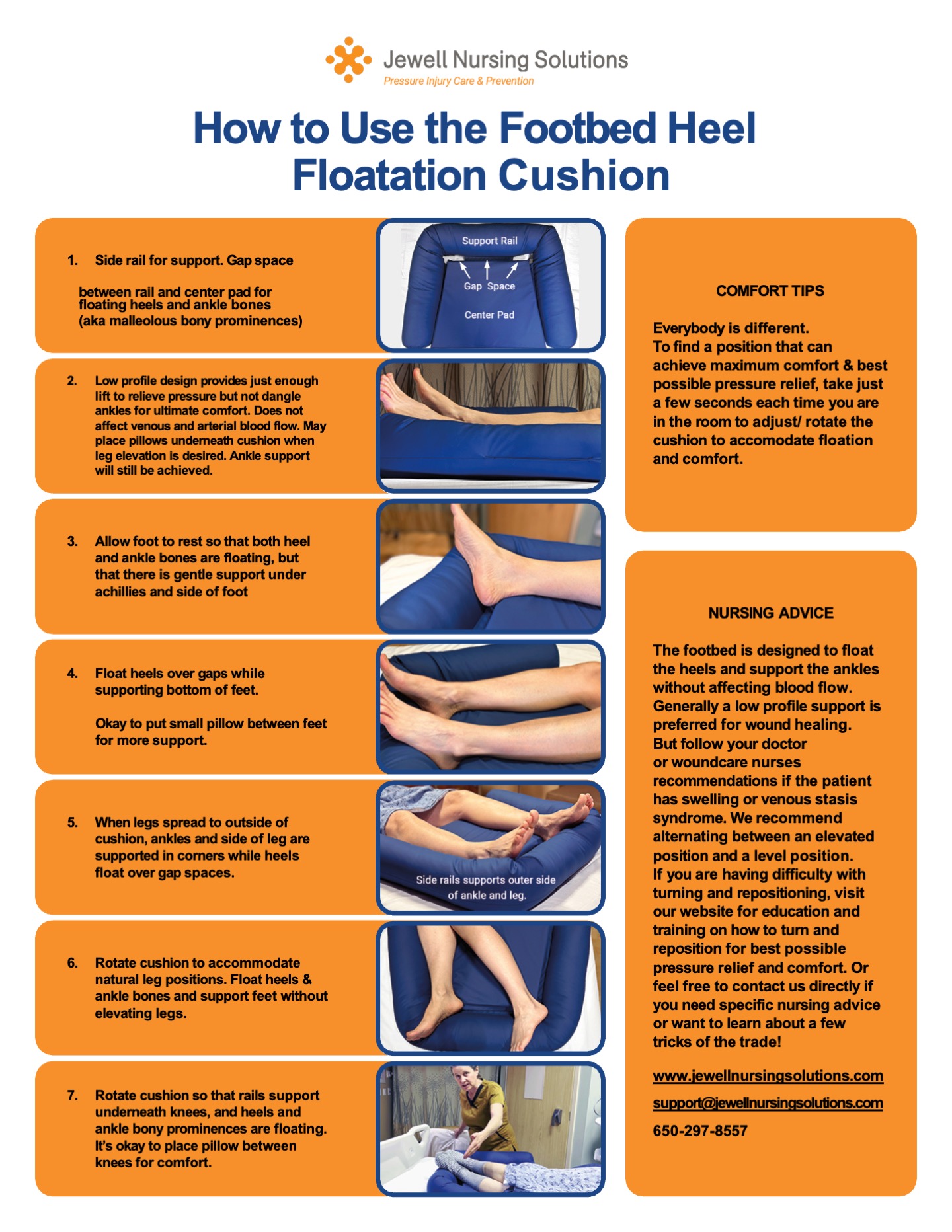
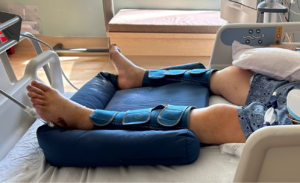
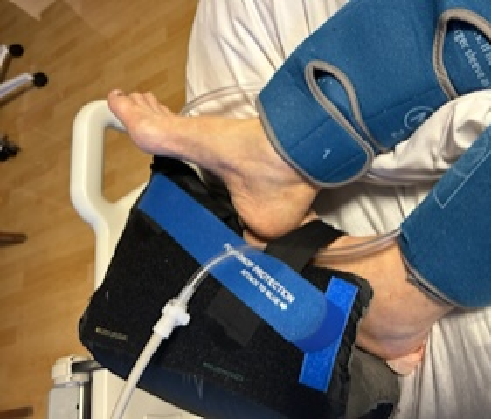
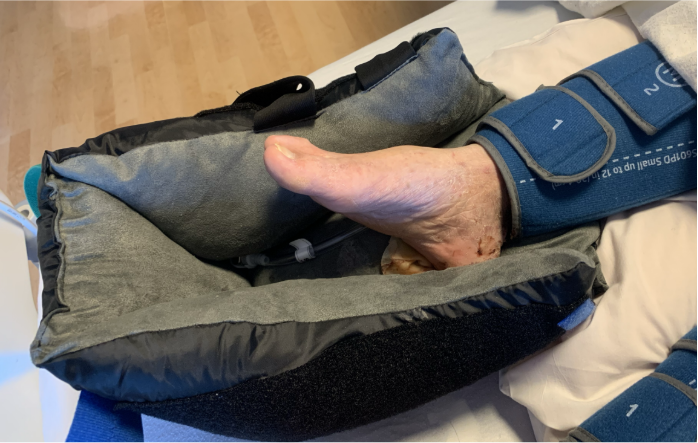
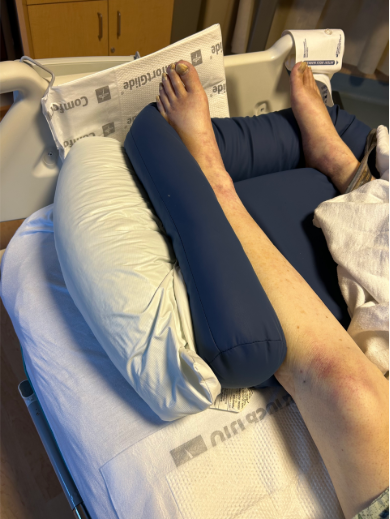
The Footbed® simplifies heel pressure injury prevention with a safer, more comfortable approach to continuous offloading Designed to float the heels and support the ankles without affecting blood flow. Medical grade materials meet best practice principles for efficient, long term heel flotation without bottoming out, binding, entangling.

Description overview

The Footbed® simplifies heel pressure injury prevention with a safer, more comfortable approach to continuous offloading. Designed to float the heels and support the ankles without affecting blood flow. Medical grade materials meet best practice principles for efficient, long term heel flotation without bottoming out, binding, or entangling. Compatible with nursing workflow — seconds to set and adjust to accommodate natural leg position, float and support as needed.

Durable, antimicrobial, multi-patient use, one year warranty. Costs less than $5.00 per patient.

Footbed instructions for use

Cleaning standard

The BackBone Positioning Wedge and Footbed Heel Floatation Pad must be wiped clean with institutionally approved disinfectant wipes between uses and when soiled.
  • Use institutionally approved wipes (Bleach, Hydrogen Peroxide, Alcohol, CHG, Quaternary Ammonium, AHP, or PDI-based cleaners).
  • DO NOT clean with toilet / bath cleansers.
  • Incontinence wipes ("baby wipes") will clean but do not disinfect.
  • Wiping with soap and rinsing will clean but does not disinfect.
  • Do not launder. Do not put in dryer. Do not submerge in tub.
  • Wipe entire surface well. Allow 1 minute dwell time to achieve sanitation.
  • Allow to air dry before re-use.
  • Inspect cushion for damage before and after use.
  • Discard if cover is damaged (torn, punctured, opened seams, etc.).
  • Discard if contamination of underlying foam is suspected.

Storage

When not in use, store in the patient room where standard pillows are stored or in a standard storage closet.

Do not store in clean utility room.

Rational – Photo Proofs

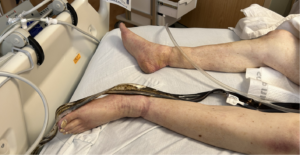
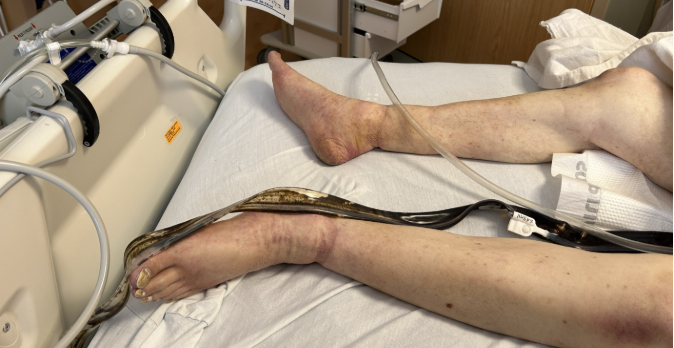
✖ Wrong

No offloading, no support

No offloading, no support
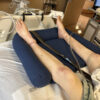
Pressure on heels and malleolus, stress on ankle joints
  • Pressure on bony prominences.
  • Risk for musculoskeletal and / or neurological damage.
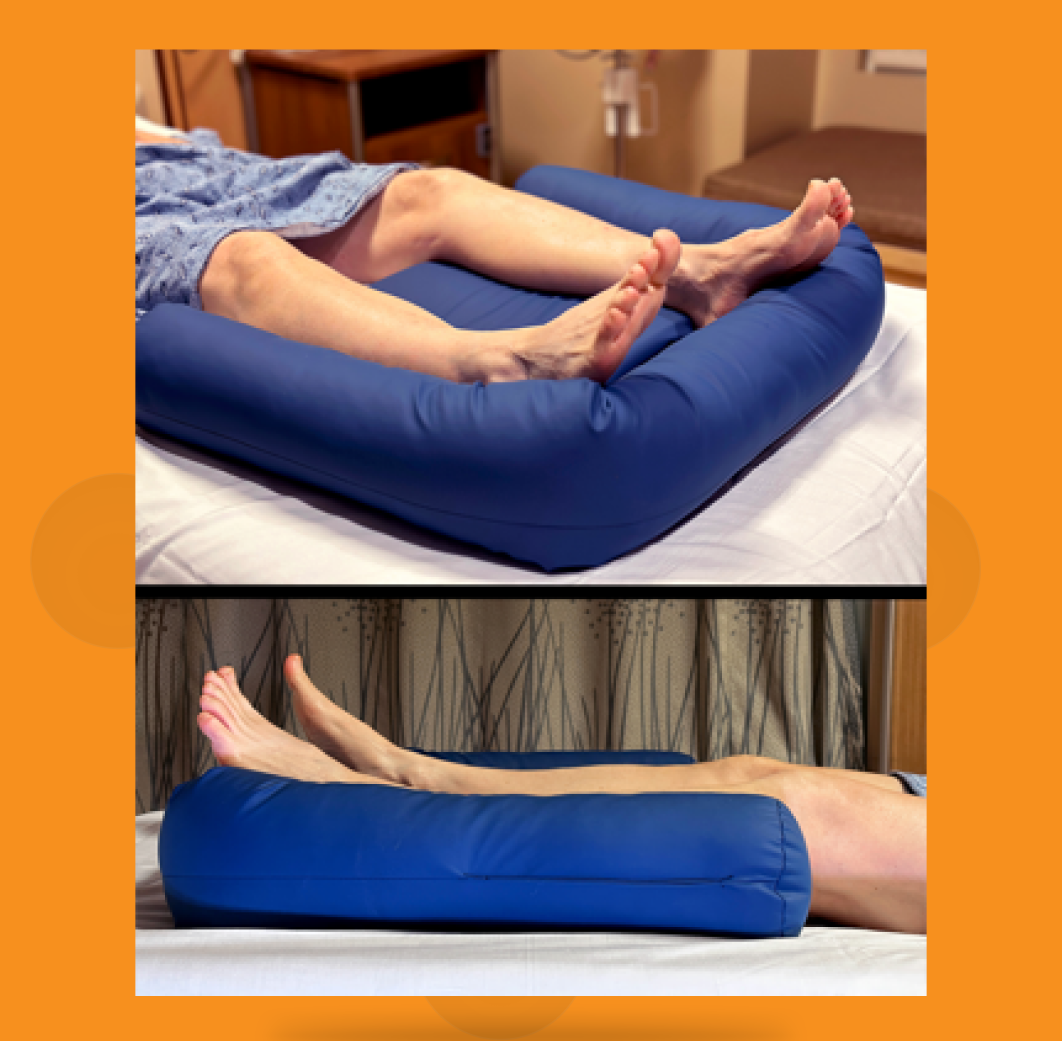
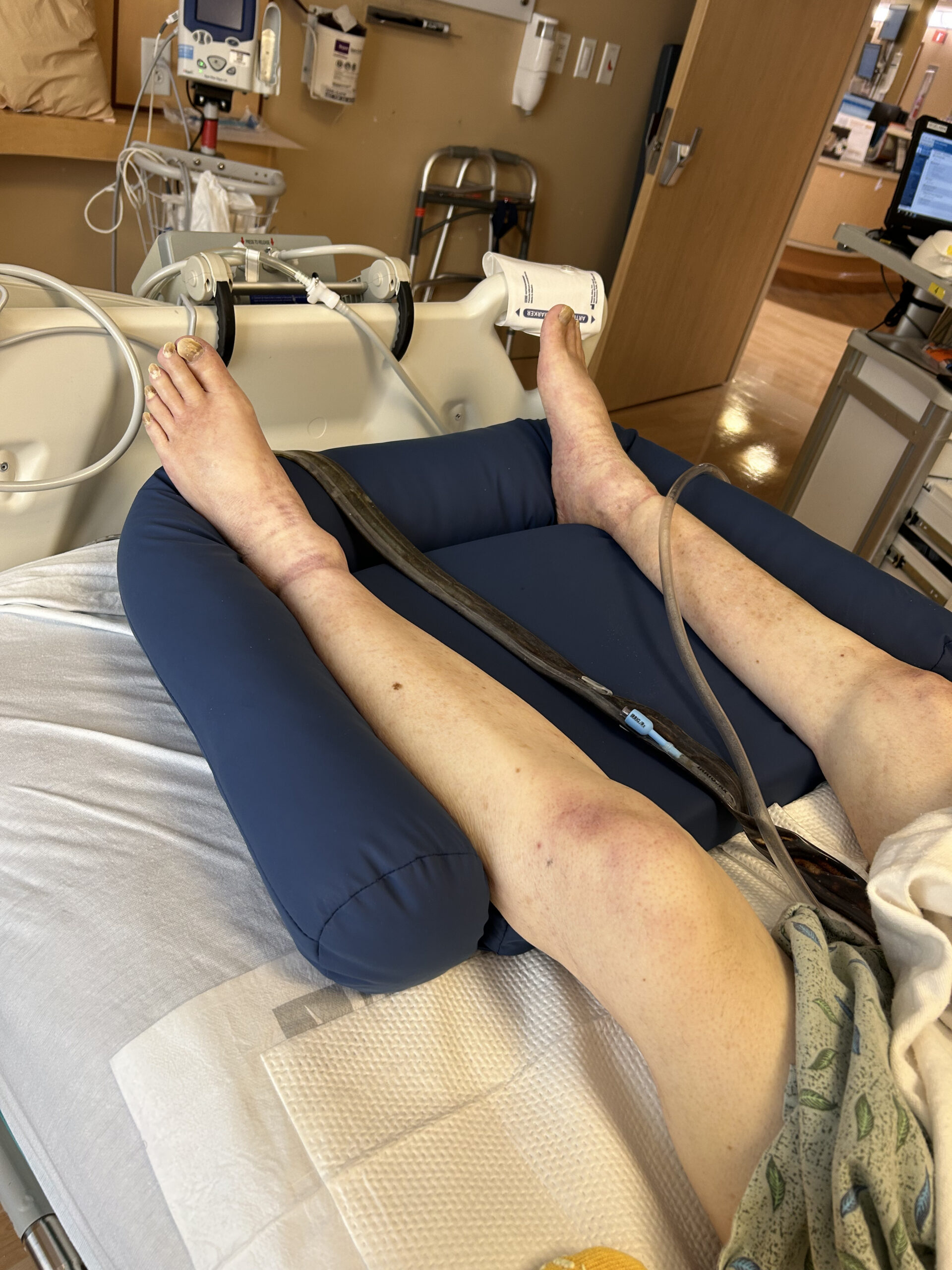
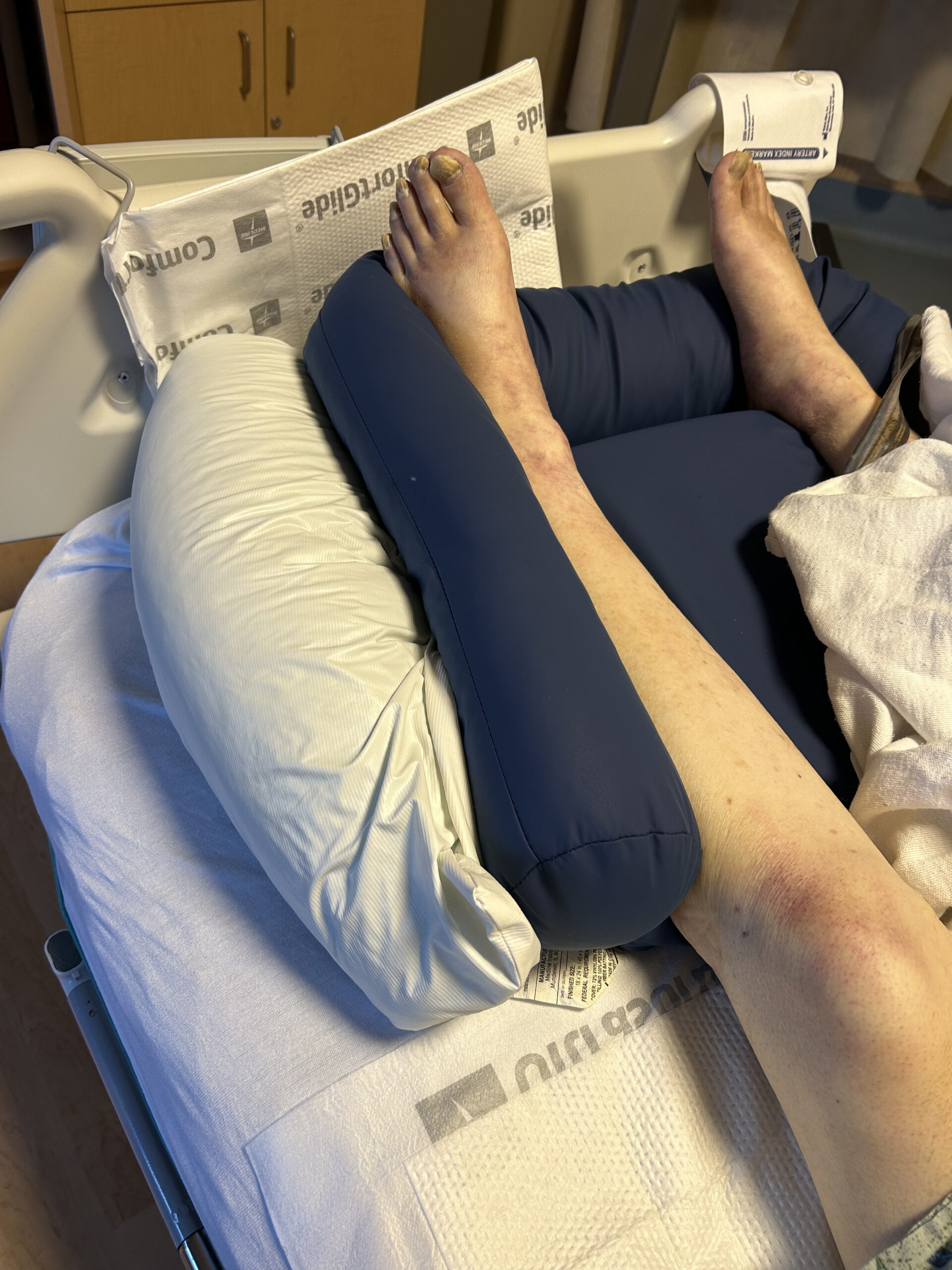
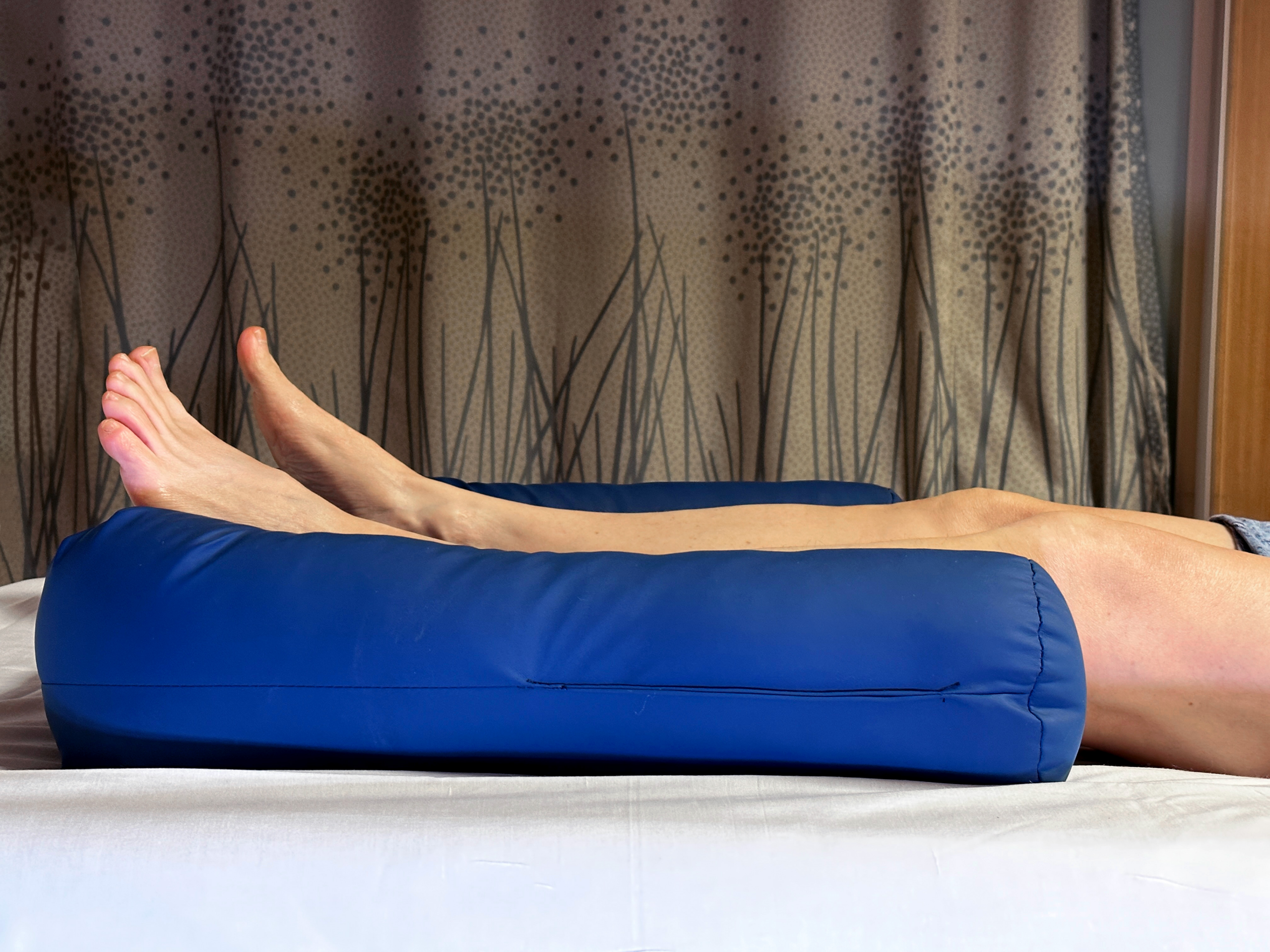
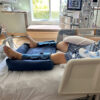
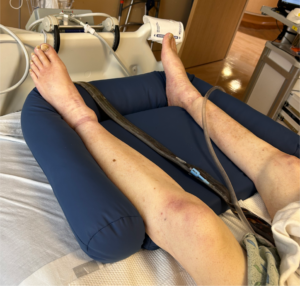
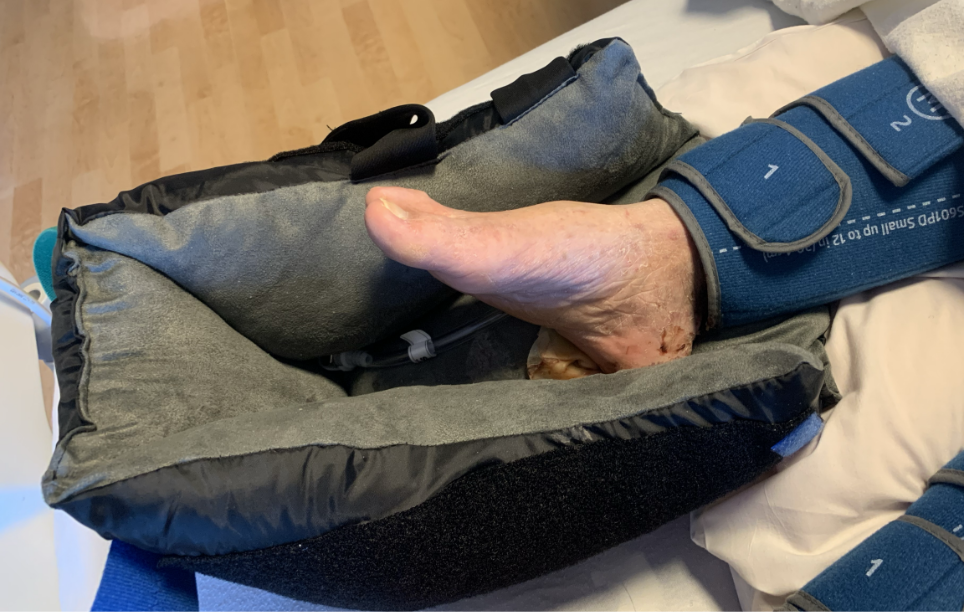
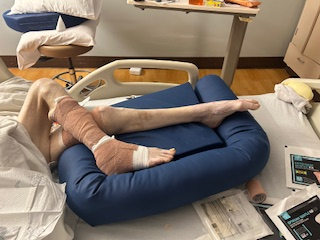
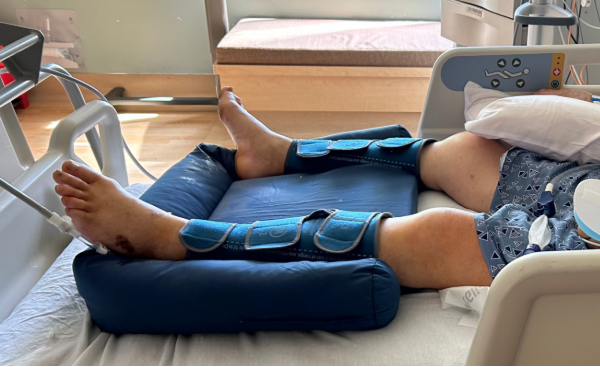
✔ Correct

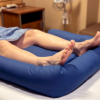
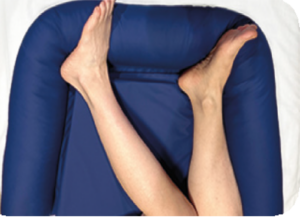
Offloading, supported

Offloading, supported
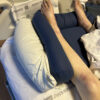
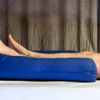
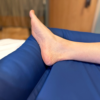
Heels and malleolus floating
  • Pad provides even, low profile lift.
  • Heels floating over space.
  • Minimal pressure on malleolus.
  • Ankles supported by side rails.
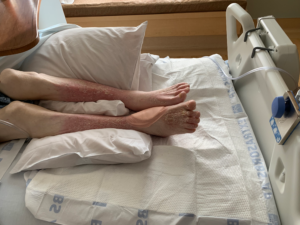
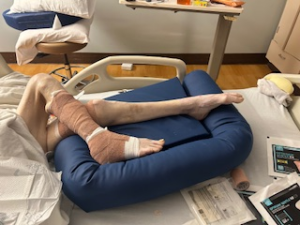
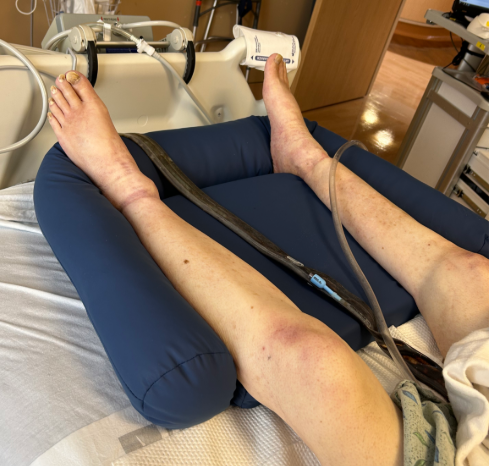
✖ Wrong

Moved off, bottomed out

Moved off, bottomed out
Heels not floating
  • Pillows flatten out, separate or bunch up under the knees, which increases pressure on heels.
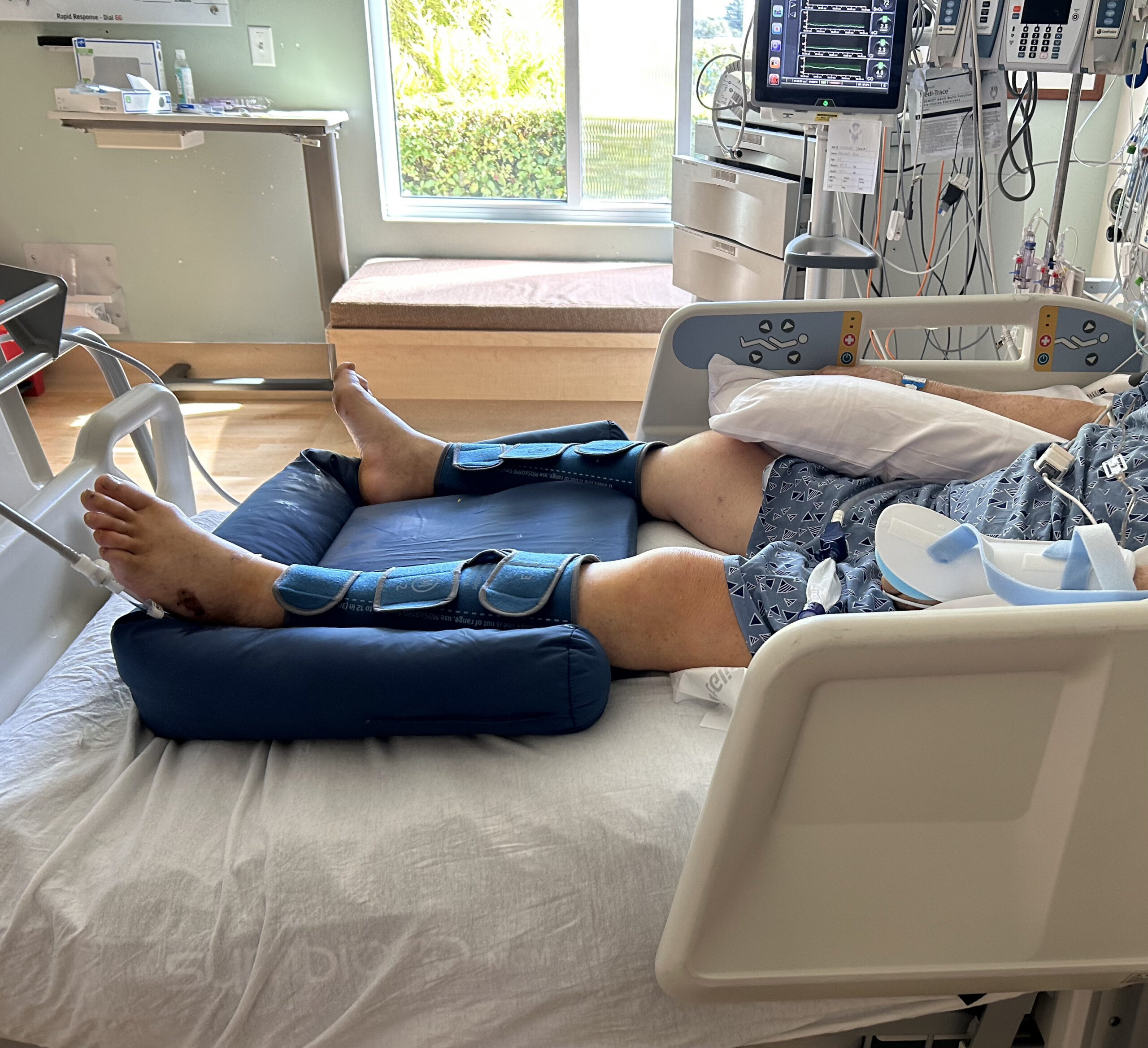
✔ Correct

Reliable lift, no slip

Reliable lift, no slip
Heels floating
  • Even, low profile lift without bunching or separating. Maintains offloading when a pillow is placed under the knees.
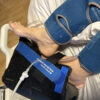
✖ Wrong

Discombobulated, tangled, pressurized

Discombobulated, tangled, pressurizedDiscombobulated, tangled, pressurizedDiscombobulated, tangled, pressurized
Binding, restricting, not offloaded
  • Added pressure to bony prominences from patient movement and caregiver handling / boosting.
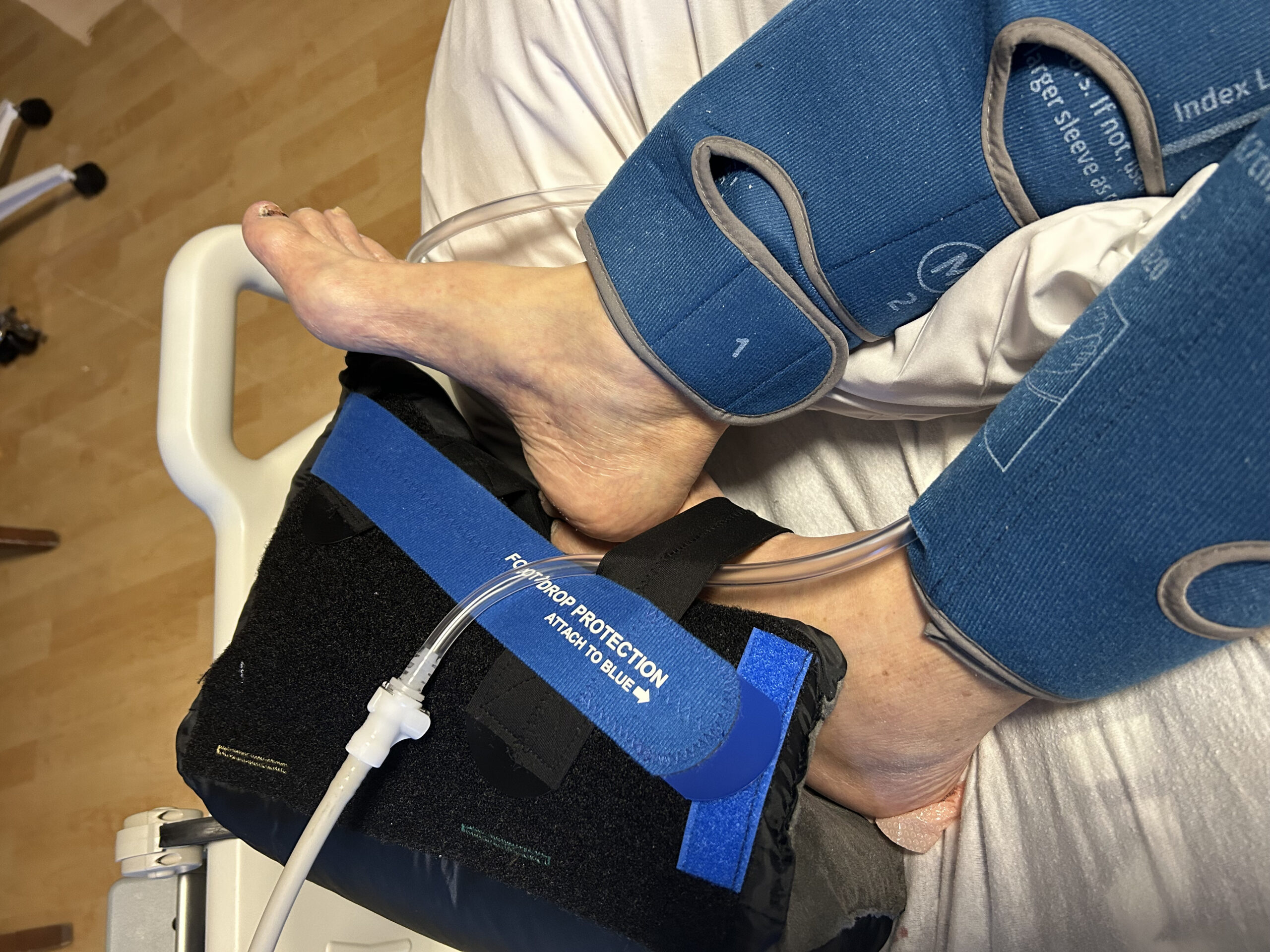
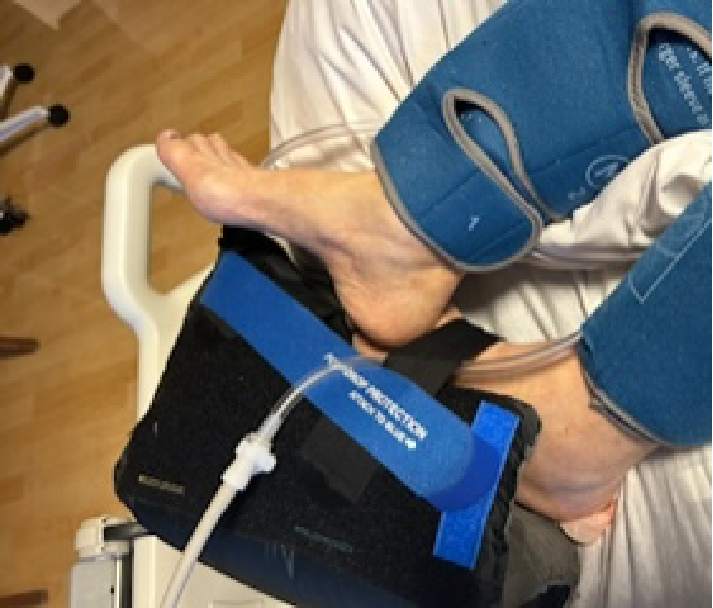
✔ Correct

Accommodates leg movement

Accommodates leg movement
Rotate to natural leg position
  • Offload where needed, support where needed.
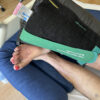
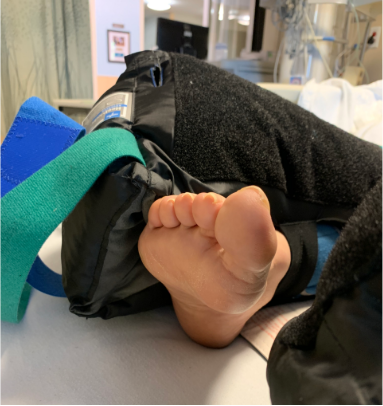
✖ Wrong

Ankle dangling, position locked

Ankle dangling, position locked
High elevation dangles ankles; offloading in supine only
  • Lack of joint support leads to pain and potential nerve damage. Forced elevation (not ok if PAD present).
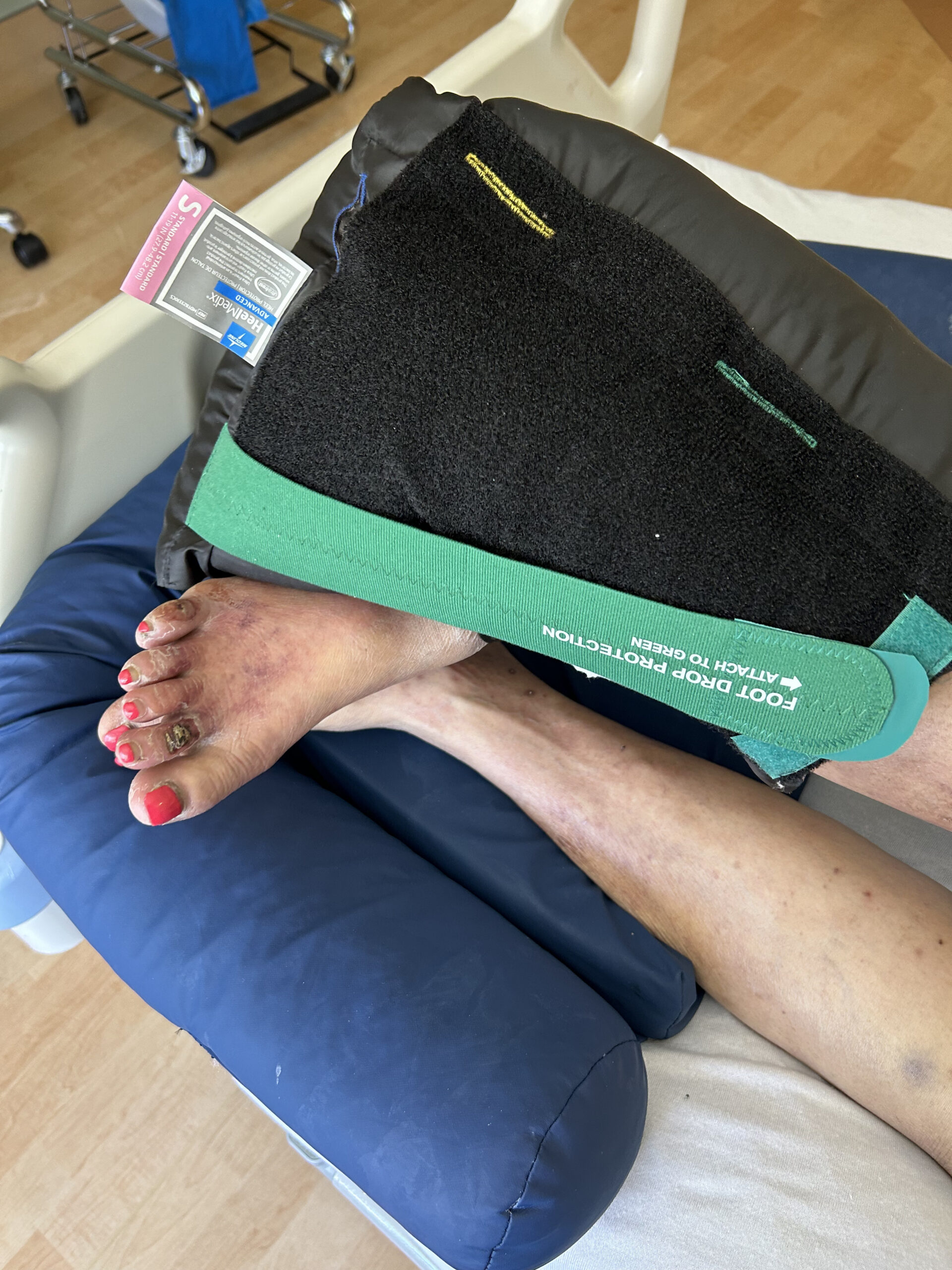
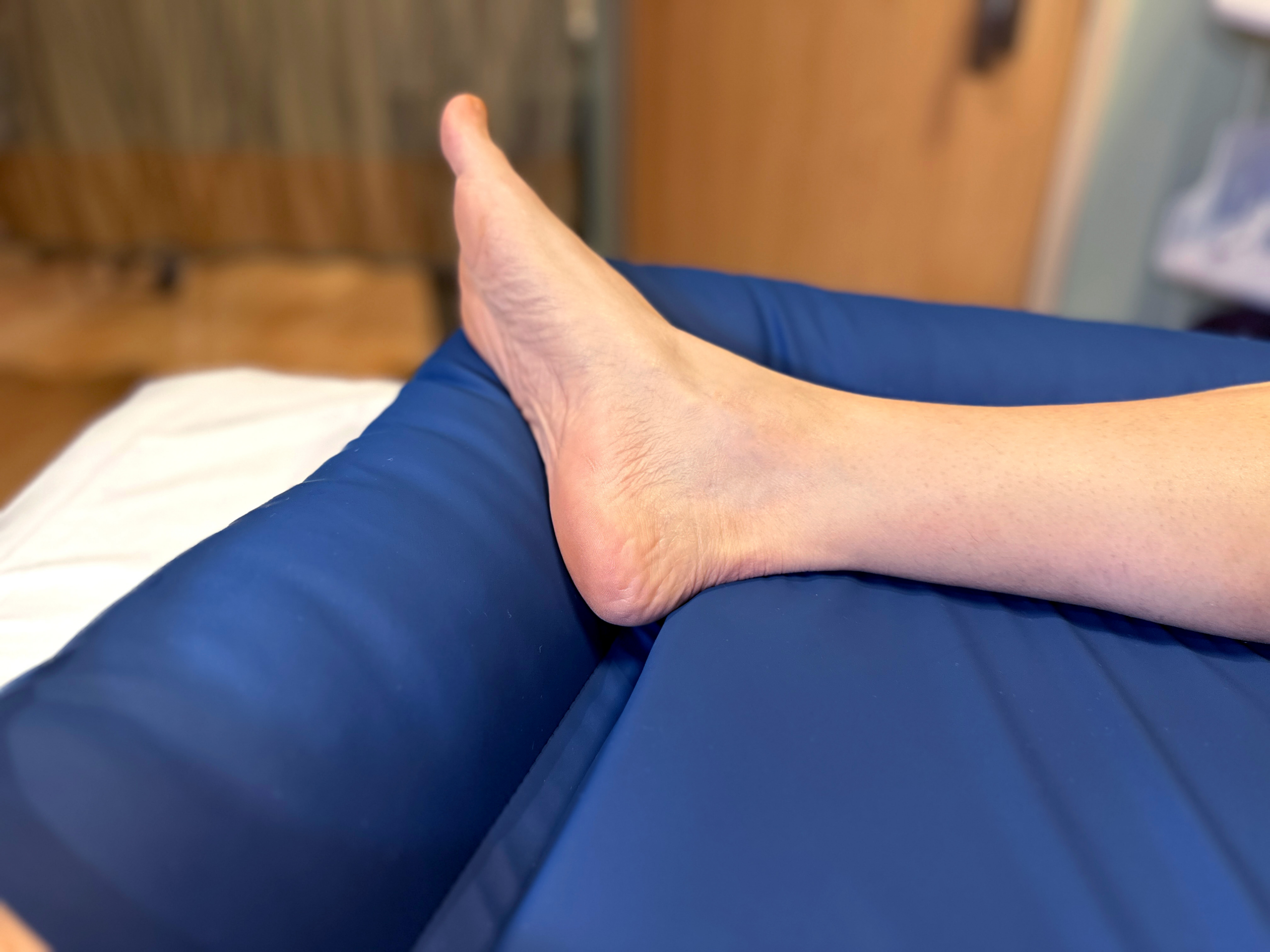
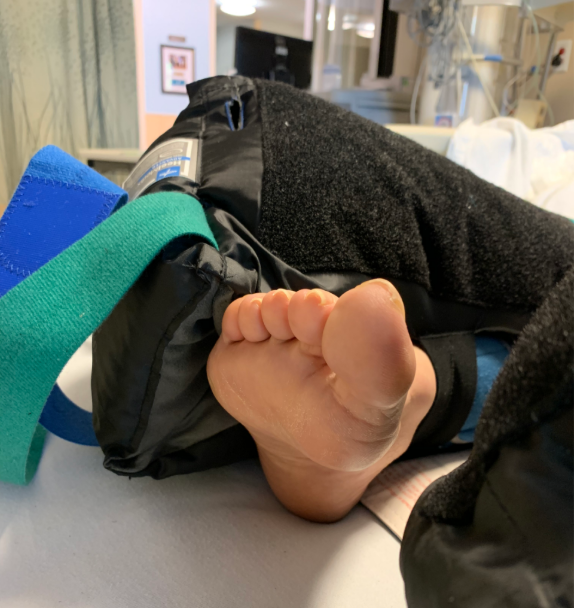
✔ Correct

Ankles supported, float when turned

Ankles supported, float when turnedAnkles supported, float when turned
Side rail support on ankles
  • Tilt the side rail for extra peroneal nerve support against foot drop.
  • Maintains heel flotation when the patient is in a turned position.

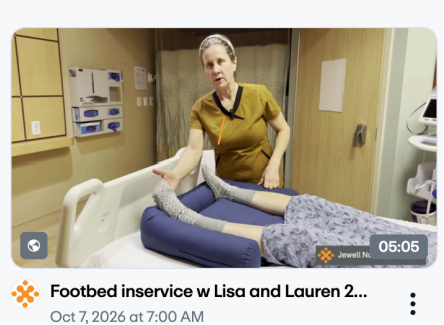
Videos Links (in Vimeo)

Gallery