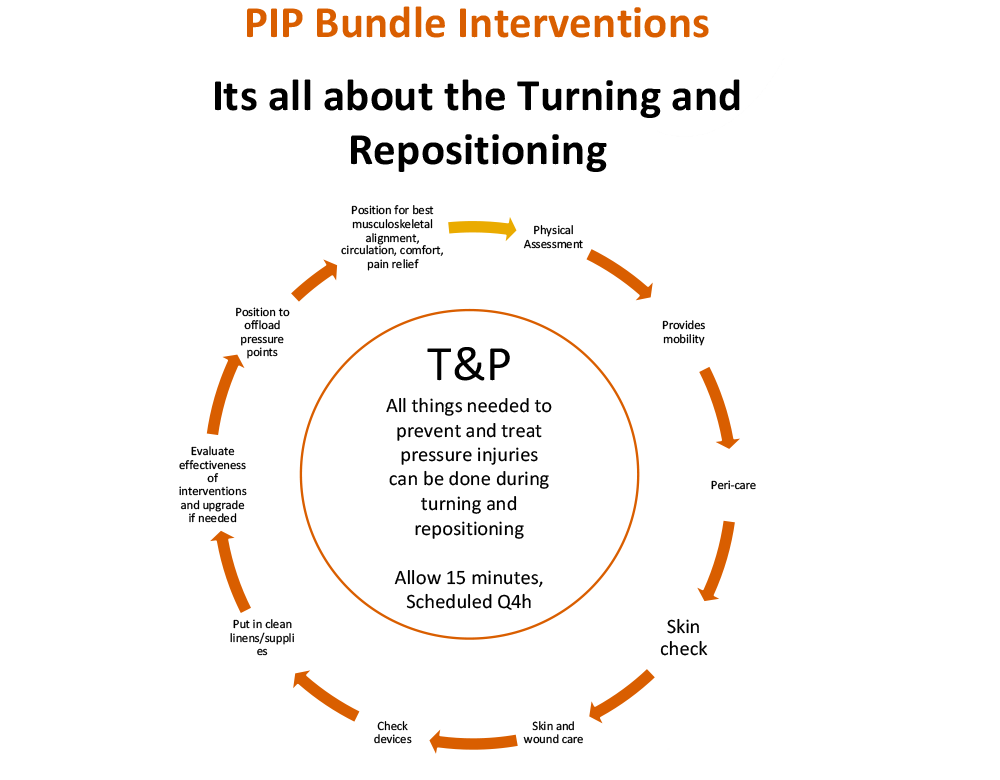
Turning and repositioning (T&P) is not just about moving a patient—it is the cornerstone of pressure injury prevention and treatment. When performed intentionally, T&P becomes a bundled 15-
minute intervention that integrates all essential care steps to protect skin, promote comfort, and prevent hospital-acquired pressure injuries.
What to Include During Each T&P Session (Scheduled Q4h):
- Physical assessment – evaluate overall condition and tolerance for movement.
- Mobility support – provide passive or active mobility to improve circulation and muscle activity.
- Peri-care – cleanse and protect skin, especially where skin is exposed to moisture.
- Skin and wound check – inspect high-risk areas and apply wound care as needed.
- Check devices – inspect lines, drains, and tubes for pressure/shear points; pad or adjust.
- Linens & supports – replace soiled linens and ensure wedges or supports are correctly positioned.
- Evaluate interventions – assess effectiveness and adjust care plan as needed.
- Positioning – offload bony prominences, align musculoskeletal structure, improve circulation and comfort.
Time & Frequency:
- Allow approximately 15 minutes per session to complete all steps without rushing.
- Perform scheduled repositioning every 4 hours (Q4h) for dependent patients.
- Individualize frequency for higher-risk patients as clinically indicated.
Why This Matters:
- Reframes T&P as a care bundle, not a task.
- Ensures consistent, proactive prevention of hospital-acquired pressure injuries.
- Integrates skin care, mobility, comfort, and device management in one session.
Gwen Jewell, of Jewell Nursing Solutions, is a wound care specialist and has a passion for seeking solutions to reduce pressure, keep patients more comfortable, and assist nurses in the fight against pressure injuries.
To download The Ultimate Guide: How to Stop Bedsores, click the title or click here.
Jewell Nursing Solutions’ mission is to empower all caregivers to prevent and heal pressure injury wounds. For more information, contact us HERE.